Other names and synonyms
involuntary urination.
ICD-10 codes
Description
Недержание мочи - это непроизвольное выделение мочи, которое может быть выявлено визуально.
Данные о частоте недержания мочи в различных возрастных группах весьма противоречивы, что, видимо, зависит от выбора изучаемой популяции. Частота недержания мочи у женщин в различных возрастных группах составляет от 14 до 56%. Частота обращения за медицинской помощью по поводу недержания мочи весьма низкая. Превалирование недержания мочи увеличивается с возрастом.
Данные о частоте недержания мочи в различных возрастных группах весьма противоречивы, что, видимо, зависит от выбора изучаемой популяции. Частота недержания мочи у женщин в различных возрастных группах составляет от 14 до 56%. Частота обращения за медицинской помощью по поводу недержания мочи весьма низкая. Превалирование недержания мочи увеличивается с возрастом.
Symptoms
Недержание мочи подразделяется на истинное и ложное.
Ложное недержание мочи - непроизвольное выделение мочи без позывов на мочеиспускание - может быть обусловлено врожденными или приобретенными дефектами мочеточника, мочевого пузыря или мочеиспускательного канала, например, при экстрофии мочевого пузыря, тотальной эписпадии уретры, тотальной гипоспадии, эктопии устьев мочеточников с необычным их расположением (например, в уретре или влагалище). Приобретенные дефекты, ведущие к ложному недержанию мочи, как правило, связаны с травмой, в результате которой нарушается целостность мочевыводящих путей с последующим образованием мочевых свищей, открывающихся на кожу, во влагалище или прямую кишку.
Истинным недержанием мочи по определению Международного общества удержания мочи (International сontinence Society - I.C.S.) является «непроизвольная потеря мочи, объективно доказуемая и вызывающая социальные и гигиенические проблемы».
В настоящее время истинное недержание мочи может быть классифицировано следующим образом:
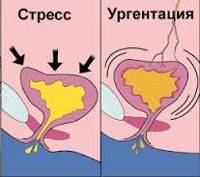
*Стрессовое недержание мочи, или недержание мочи при напряжении.
*Ургентное (императивное) недержание мочи - непроизвольная потеря мочи с предшествующим безотлагательным позывом на мочеиспускание.
*Смешанное недержание мочи - сочетание стрессового и ургентного недержания мочи.
*Энурез - любая непроизвольная потеря мочи.
*Ночной энурез - потеря мочи во время сна.
*Постоянное недержание мочи.
*Другие типы недержания мочи - могут быть ситуационными (при половом акте, смехе).
Истинное недержание мочи наблюдается при повреждениях спинного мозга, спинномозговой грыже, запущенном цистите, осложненном сморщиванием мочевого пузыря. Истинное недержание мочи при напряжении может появляться при изменении положения тела, при физической нагрузке той или иной степени выраженности, при увеличении внутрибрюшного давления Оно обусловлено снижением тонуса мышц тазового дна, ослаблением сфинктеров мочевого пузыря. У мужчин истинное недержание мочи может быть осложнением операций на шейке мочевого пузыря, предстательной железе, семенном бугорке. В климактерическом периоде у женщин истинное недержание мочи может быть связано с нарушением тонуса детрузора и нарушением функции замыкательного аппарата мочевого пузыря вследствие развивающегося эстрогенного дефицита. Механизмы истинного недержания мочи выявляются у больных с парадоксальной задержкой мочеиспускания на фоне переполнения мочевого пузыря, которое сопровождается перерастяжением внутреннего и увеличивающейся недостаточностью наружного сфинктера мочевого пузыря и исчезнувших позывов на мочеиспускание.
К истинному недержанию мочи при напряжении могут присоединиться или развиться самостоятельно симптомы гиперактивного мочевого пузыря с ургентным недержанием мочи или без него. Гиперактивная функция детрузора характеризуется непроизвольными его сокращениями во время фазы наполнения мочевого пузыря, которые могут быть как спонтанными, так и спровоцированными (при быстром наполнении, изменении положения тела, кашле, ходьбе, прыжках и пр.), в то время как пациент пытается подавить эти сокращения. Состояние диагностируется при проведении уродинамического исследования. Помимо поллакиурии для клинического проявления гиперактивного мочевого пузыря характерно наличие императивных (неотложных) позывов на мочеиспускание и/или неудержания мочи при таком позыве (ургентное или императивное недержание мочи). Недержание мочи или, даже, неудержание мочи может быть также следствием нестабильности уретры.
Ассоциированные симптомы: Запор. Зуд в интимной зоне у мужчин. Императивный позыв. Кашель. Недержание газов. Никтурия. Потеря веса. Рези при мочеиспускании у женщин. Странгурия. Судороги.
Ложное недержание мочи - непроизвольное выделение мочи без позывов на мочеиспускание - может быть обусловлено врожденными или приобретенными дефектами мочеточника, мочевого пузыря или мочеиспускательного канала, например, при экстрофии мочевого пузыря, тотальной эписпадии уретры, тотальной гипоспадии, эктопии устьев мочеточников с необычным их расположением (например, в уретре или влагалище). Приобретенные дефекты, ведущие к ложному недержанию мочи, как правило, связаны с травмой, в результате которой нарушается целостность мочевыводящих путей с последующим образованием мочевых свищей, открывающихся на кожу, во влагалище или прямую кишку.
Истинным недержанием мочи по определению Международного общества удержания мочи (International сontinence Society - I.C.S.) является «непроизвольная потеря мочи, объективно доказуемая и вызывающая социальные и гигиенические проблемы».
В настоящее время истинное недержание мочи может быть классифицировано следующим образом:
*Стрессовое недержание мочи, или недержание мочи при напряжении.
*Ургентное (императивное) недержание мочи - непроизвольная потеря мочи с предшествующим безотлагательным позывом на мочеиспускание.
*Смешанное недержание мочи - сочетание стрессового и ургентного недержания мочи.
*Энурез - любая непроизвольная потеря мочи.
*Ночной энурез - потеря мочи во время сна.
*Постоянное недержание мочи.
*Другие типы недержания мочи - могут быть ситуационными (при половом акте, смехе).
Истинное недержание мочи наблюдается при повреждениях спинного мозга, спинномозговой грыже, запущенном цистите, осложненном сморщиванием мочевого пузыря. Истинное недержание мочи при напряжении может появляться при изменении положения тела, при физической нагрузке той или иной степени выраженности, при увеличении внутрибрюшного давления Оно обусловлено снижением тонуса мышц тазового дна, ослаблением сфинктеров мочевого пузыря. У мужчин истинное недержание мочи может быть осложнением операций на шейке мочевого пузыря, предстательной железе, семенном бугорке. В климактерическом периоде у женщин истинное недержание мочи может быть связано с нарушением тонуса детрузора и нарушением функции замыкательного аппарата мочевого пузыря вследствие развивающегося эстрогенного дефицита. Механизмы истинного недержания мочи выявляются у больных с парадоксальной задержкой мочеиспускания на фоне переполнения мочевого пузыря, которое сопровождается перерастяжением внутреннего и увеличивающейся недостаточностью наружного сфинктера мочевого пузыря и исчезнувших позывов на мочеиспускание.
К истинному недержанию мочи при напряжении могут присоединиться или развиться самостоятельно симптомы гиперактивного мочевого пузыря с ургентным недержанием мочи или без него. Гиперактивная функция детрузора характеризуется непроизвольными его сокращениями во время фазы наполнения мочевого пузыря, которые могут быть как спонтанными, так и спровоцированными (при быстром наполнении, изменении положения тела, кашле, ходьбе, прыжках и пр.), в то время как пациент пытается подавить эти сокращения. Состояние диагностируется при проведении уродинамического исследования. Помимо поллакиурии для клинического проявления гиперактивного мочевого пузыря характерно наличие императивных (неотложных) позывов на мочеиспускание и/или неудержания мочи при таком позыве (ургентное или императивное недержание мочи). Недержание мочи или, даже, неудержание мочи может быть также следствием нестабильности уретры.
Ассоциированные симптомы: Запор. Зуд в интимной зоне у мужчин. Императивный позыв. Кашель. Недержание газов. Никтурия. Потеря веса. Рези при мочеиспускании у женщин. Странгурия. Судороги.
Reasons
Недержание мочи при напряжений может быть двух основных видов: заболевание, связанное с дислокацией и ослаблением связочного аппарата, неизмененного мочеиспускательного канала и уретровезикального сегмента, что относится к анатомическому недержанию мочи, и заболевание, связанное с изменениями в самом мочеиспускательном канале и сфинктерном аппарате, приводящими к нарушению функции замыкательного аппарата.
Удержание мочи обеспечивается взаимодействием уретральных и экстрауретральных факторов, а также правильным анатомическим положением внутренних половых органов.
Условиями для удержания мочи являются:
*полноценное состояние уротелия и наличие слизи в просвете уретры;
*эластичность коллагеновых структур, входящих в состав соединительной ткани уретры;
*сохраненный тонус гладкой мускулатуры уретральной стенки;
*полноценная васкуляризация уретры.
Среди множества факторов, влияющих на уродинамику мочевых путей, значительная роль принадлежит колебаниям соотношения половых и глюкокортикоидных гормонов и их опосредованному влиянию на а- и бета-адренергические рецепторы. Следует отметить, что в женском организме потенцирование эффектов симпатической нервной системы на функцию сфинктерного аппарата мочевого пузыря зависит от циклических изменений в яичниках, которые происходят как на протяжении всей жизни, так и в течение одного менструального цикла.
Этиологические факторы развития ургентного недержания мочи, являющегося одним из симптомов гиперактивного мочевого пузыря или нестабильности уретры, могут быть нейрогенными (вследствие неврологического заболевания) и не нейрогенными.
Не нейрогенные причины:
*возраст;
*инфравезикальная обструкция (ИВО);
*эстрогенный дефицит у женщин в климактерическом периоде;
*нарушения кровообращения;
*миогенные нарушения (ультраструктурные изменения детрузора - нарушения контакта между миоцитами и появление выпячиваний клеточных мембран смежных миоцитов);
*сенсорные нарушения (нарушение барьерных свойств уроте-лия);
*анатомические изменения положения уретры и мочевого пузыря;
*влияние простагландинов и серотонина.
Удержание мочи обеспечивается взаимодействием уретральных и экстрауретральных факторов, а также правильным анатомическим положением внутренних половых органов.
Условиями для удержания мочи являются:
*полноценное состояние уротелия и наличие слизи в просвете уретры;
*эластичность коллагеновых структур, входящих в состав соединительной ткани уретры;
*сохраненный тонус гладкой мускулатуры уретральной стенки;
*полноценная васкуляризация уретры.
Среди множества факторов, влияющих на уродинамику мочевых путей, значительная роль принадлежит колебаниям соотношения половых и глюкокортикоидных гормонов и их опосредованному влиянию на а- и бета-адренергические рецепторы. Следует отметить, что в женском организме потенцирование эффектов симпатической нервной системы на функцию сфинктерного аппарата мочевого пузыря зависит от циклических изменений в яичниках, которые происходят как на протяжении всей жизни, так и в течение одного менструального цикла.
Этиологические факторы развития ургентного недержания мочи, являющегося одним из симптомов гиперактивного мочевого пузыря или нестабильности уретры, могут быть нейрогенными (вследствие неврологического заболевания) и не нейрогенными.
Не нейрогенные причины:
*возраст;
*инфравезикальная обструкция (ИВО);
*эстрогенный дефицит у женщин в климактерическом периоде;
*нарушения кровообращения;
*миогенные нарушения (ультраструктурные изменения детрузора - нарушения контакта между миоцитами и появление выпячиваний клеточных мембран смежных миоцитов);
*сенсорные нарушения (нарушение барьерных свойств уроте-лия);
*анатомические изменения положения уретры и мочевого пузыря;
*влияние простагландинов и серотонина.
Treatment
Недержание мочи устраняют консервативными и хирургическими методами.
Неоперативные методы лечения показаны больным с легкой степенью недержания мочи при напряжении, ургентным недержанием мочи, обусловленным гиперактивностью детрузора или уретры, при сочетании стрессового и ургентного недержания мочи. Лечение недержания мочи при напряжении ведется по двум направлениям. Первое - это повышение тонуса замыкательного аппарата мочевого пузыря, тонуса детрузора, второе - торможение активности детрузора при ургентной и комбинированной формах недержания мочи.
Полагают, что у женщин в менопаузе стрессовое и ургентное недержание мочи являются последствием нарастающего эстрогенного дефицита. У женщин с недержанием мочи в климактерическом периоде назначение эстрогенов сопровождается достоверным увеличением внутриуретрального давления. Считается, что независимо от способа введения эстрогенов (орального, влагалищного, трансдермального, внутримышечного) эстрогенотерапия приводит к положительным результатам в лечении стрессового недержания мочи у женщин в периоде менопаузы.
Проводя комплексную консервативную терапию недержания мочи при напряжении, необходимо в том числе увеличить физические нагрузки, нормализовать диету, поскольку масса тела у многих больных превышает норму примерно на 30 %. Лечебная физкультура (ЛФК) улучшает кровоснабжение органов малого таза, укрепляет мышечно-связочный аппарат, повышает компенсаторную функцию сердечно-сосудистой и дыхательной систем и улучшает психический статус больных.
Редко больные с легкой степенью недержания мочи используют пессарии различных конструкций. Необходимость извлечения их перед мочеиспусканием, а затем обратной установки причиняет значительные неудобства больным. Более того, описаны случаи образования пролежней при использовании пессария. Исключением являются электронные пессарии, действие которых основано на механической компрессии мочеиспускательного канала.
Удовлетворительные результаты получены после электростимуляции органов и тканей таза. При легкой степени недержания мочи эффективным является также иглоукалывание.
К малоинвазивным хирургическим методам лечения недержания мочи при напряжении относится инъекционная терапия у женщин, у которых отсутствует выраженное опущение стенок влагалища и мочевого пузыря, а также нейрогенные расстройства мочеиспускания. Для проведения инъекционной терапии используются различные субстанции - коллаген, тефлоновая паста, гомогенизированный аутожир и.
Неоперативные методы лечения показаны больным с легкой степенью недержания мочи при напряжении, ургентным недержанием мочи, обусловленным гиперактивностью детрузора или уретры, при сочетании стрессового и ургентного недержания мочи. Лечение недержания мочи при напряжении ведется по двум направлениям. Первое - это повышение тонуса замыкательного аппарата мочевого пузыря, тонуса детрузора, второе - торможение активности детрузора при ургентной и комбинированной формах недержания мочи.
Полагают, что у женщин в менопаузе стрессовое и ургентное недержание мочи являются последствием нарастающего эстрогенного дефицита. У женщин с недержанием мочи в климактерическом периоде назначение эстрогенов сопровождается достоверным увеличением внутриуретрального давления. Считается, что независимо от способа введения эстрогенов (орального, влагалищного, трансдермального, внутримышечного) эстрогенотерапия приводит к положительным результатам в лечении стрессового недержания мочи у женщин в периоде менопаузы.
Проводя комплексную консервативную терапию недержания мочи при напряжении, необходимо в том числе увеличить физические нагрузки, нормализовать диету, поскольку масса тела у многих больных превышает норму примерно на 30 %. Лечебная физкультура (ЛФК) улучшает кровоснабжение органов малого таза, укрепляет мышечно-связочный аппарат, повышает компенсаторную функцию сердечно-сосудистой и дыхательной систем и улучшает психический статус больных.
Редко больные с легкой степенью недержания мочи используют пессарии различных конструкций. Необходимость извлечения их перед мочеиспусканием, а затем обратной установки причиняет значительные неудобства больным. Более того, описаны случаи образования пролежней при использовании пессария. Исключением являются электронные пессарии, действие которых основано на механической компрессии мочеиспускательного канала.
Удовлетворительные результаты получены после электростимуляции органов и тканей таза. При легкой степени недержания мочи эффективным является также иглоукалывание.
К малоинвазивным хирургическим методам лечения недержания мочи при напряжении относится инъекционная терапия у женщин, у которых отсутствует выраженное опущение стенок влагалища и мочевого пузыря, а также нейрогенные расстройства мочеиспускания. Для проведения инъекционной терапии используются различные субстанции - коллаген, тефлоновая паста, гомогенизированный аутожир и.